Addressing Wage and Hour Compliance
As you progress in making your restaurant compliant with various regulations, a crucial area you need to focus on is wage and hour compliance. Let’s delve into this topic and its implications.
Overview of Wage and Hour Laws
The Fair Labor Standards Act (FLSA) is a federal law that regulates minimum wage, overtime pay, recordkeeping, and youth employment standards. Notably, it also contains specific rules for restaurants, such as tip credit and pooling policies.
Wage and hour laws include several key types of regulation:
- Minimum Wage Requirements: All employers must comply with the federal, state, and local minimum wage standards, remembering that these minimums are different for tipped workers. You must also remember that overtime pay is not just the regular rate—it’s one-and-a-half times the regular rate (the regular rate should include both base pay and an average estimate for tips).
- Child Labor Laws: You need to adhere to both federal and state laws if you’re considering hiring restaurant employees under 18. Each state has specific regulations about the hours minors can work and the kind of jobs they can perform. Remember that teenagers can perform certain cooking tasks, but cannot bake or use many potentially dangerous appliances.
- Leave Requests: Ensure you effectively manage employee leave requests, including those pertaining to medical leave, maternity/paternity leave, and vacation time, adhering to the guidelines of the Family and Medical Leave Act (FMLA).
- Tip Credit: When an employer “takes a tip credit,” it means they are allowed to pay tipped employees below minimum wage, with some limitations. This is only permitted when the employee is doing work that can result in tips. If an employee spends 20% of their work hours or 30 minutes of a given shift on non-tipped work, the employer must pay them at least minimum wage. For example, if a server spends 45 minutes cleaning up at the end of the night, their employer must pay them minimum wage for the final 15 minutes.
- Pooling Policies: Employers must follow certain guidelines when establishing tip pools. All tips that go through a tip pool must be paid out within the same pay period in which they are earned, and the employer may not keep any employee tips. If you pay full minimum wage and do not take a tip credit, you may also include non-tipped employees in tip pools, which can be a powerful retention strategy for back-of-house workers.
The Pitfalls of Non-Compliance
Failing to adhere to wage and hour laws can lead to significant penalties. Non-compliant restaurants potentially face back pay, fines, or even lawsuits from employees. Misclassifying employees as exempt from overtime or underpaying employees can be very costly mistakes.
A 2018 report from the National Library of Medicine estimated that one outbreak of foodborne illness could cost a fast-casual restaurant up to $2.1 million, or a fine-dining restaurant up to $2.6 million. Food handler training is an important preventative measure here.
Additionally, restaurants could be at risk for labor law violations. One cautionary is Tank Noodle, a Vietnamese restaurant in Chicago that came under scrutiny after one employee alleged they hadn’t received their full pay. The complaint turned into a full-scale investigation involving 60 employees, and the business was ultimately forced to pay $700,000 in back wages. And that’s without factoring in the cost of litigation.
Compliance isn’t just about avoiding penalties—it’s also about building a positive company culture. By ensuring your team is paid correctly, you boost morale, increase productivity, and reduce turnover. Conversely, non-compliance can tarnish your restaurant’s image and your relationship with employees.
Predictive Scheduling and Fair Workweek Laws
Introduction to Predictive Scheduling
Recently, certain states and localities have enacted predictive scheduling requirements. These requirements determine how employers should communicate with employees about scheduling—in general, requiring that employers make good faith predictions about schedules well in advance.
In San Francisco, for instance, certain employers must provide workers with schedules at least two weeks in advance and pay an additional 1 to 4 hours of wages if employee schedules change with less than seven days’ notice.
While these laws can pose certain challenges for employers, they also have benefits—including a happier workforce and, potentially, more predictable labor forecasting.
Each affected state and locality has its own rules regarding predictive scheduling (indeed, some states have passed laws barring predictive scheduling rules from being enacted). To stay compliant, employees must keep a careful eye on local scheduling rules—or use scheduling software that integrates these rules automatically.
Navigating Fair Workweek Regulations
Like predictive scheduling, fair workweek laws hold immense significance in the food service industry. These rules are aimed at providing employees with stable, predictable income, and aim to reduce unpredictable scheduling. Although these rules vary by locality, they focus on preventing practices like last-minute schedule changes, shift cancellations, and “clopenings” (when an employee works a closing and an opening shift back-to-back).
At this point, fair workweek laws mainly affect retail and restaurant businesses. Oregon is currently the only state to have enacted a general fair workweek law, but similar legislation has passed in a number of major cities, including New York City, San Francisco, Chicago, and Seattle.
As with predictive scheduling rules, fair workweek laws are continuing to develop on a case-by-case basis. Follow your local laws closely, or consider partnering with a PEO that can manage these compliance issues for you.
Leveraging HotSchedules for Predictive Scheduling Compliance
As a restaurant manager or owner, you’re aware of how unpredictable the industry can be. The goal is to maintain a balance between your staffing needs and your employees’ work-life balance, without affecting your restaurant’s bottom line. A tool like HotSchedules can help you schedule efficiently while staying in compliance with developing regulations.
Introduction to HotSchedules
HotSchedules is a cloud-based scheduling software designed specifically for the restaurant industry. It optimizes the scheduling process, making it more effective and efficient. HotSchedules’ centralized platform allows employees to swap shifts, request time off, and even pick up open shifts—all in one place. Simply put, you’ll spend less time scheduling and more time managing your restaurant.
How HotSchedules Supports Fair Workweek Compliance
HotSchedules automatically adheres to local labor regulations, preventing any violations of fair workweek laws. It also helps you stay in line with minimum wage compliance requirements, overtime pay, and child labor laws.
HotSchedules allows employees to take control of their own schedules. Employees are able to make bids on shifts and request time off easily, resulting in both greatest satisfaction and fewer concerns about overwork.
Failing to meet restaurant compliance guidelines can lead to hefty fines and damage your reputation. By leveraging HotSchedules and a reliable PEO, you can ensure adherence to these laws, thus safeguarding your restaurant’s future.
Take the Pain Out of Scheduling
With HotSchedules, we help you optimize your workforce, cut labor costs, and build better employee experiences. Learn how HotSchedules can simplify your schedules and help you stay compliant.
The Role of PEO Services in Simplifying Compliance
Staying up to date with restaurant HR compliance can be an exhaustive, and exhausting, process. But luckily, you don’t have to do it alone. By partnering with a PEO, you can automate many of the aspects of compliance. This will save you time, money, and legal risk, all while offering a better workplace for employees.
What Is a PEO?
A Professional Employer Organization (PEO) acts as a “co-employer,” partnering with businesses to outsource complex HR tasks. As a restaurant owner, partnering with a PEO can help you tackle compliance challenges head-on and navigate through various employment laws and regulations.
A PEO can guide you through all relevant labor laws, such as minimum wage requirements, overtime pay, and child labor laws. This co-employment model means your restaurant maintains daily control over staff, while the PEO handles HR management.
Why Restaurants Are Using PEO Services
What are the benefits of partnering with a PEO for a restaurant? The answer is extensive, covering both finances and HR concerns.
PEO partnerships have been proven to result in more efficient operations, lower turnover, and higher profits. The national fast-casual business Noodles & Company is one example: after adopting HotSchedules, the business improved the accuracy of its labor forecasting by 20% and reduced labor spend by $4 million.
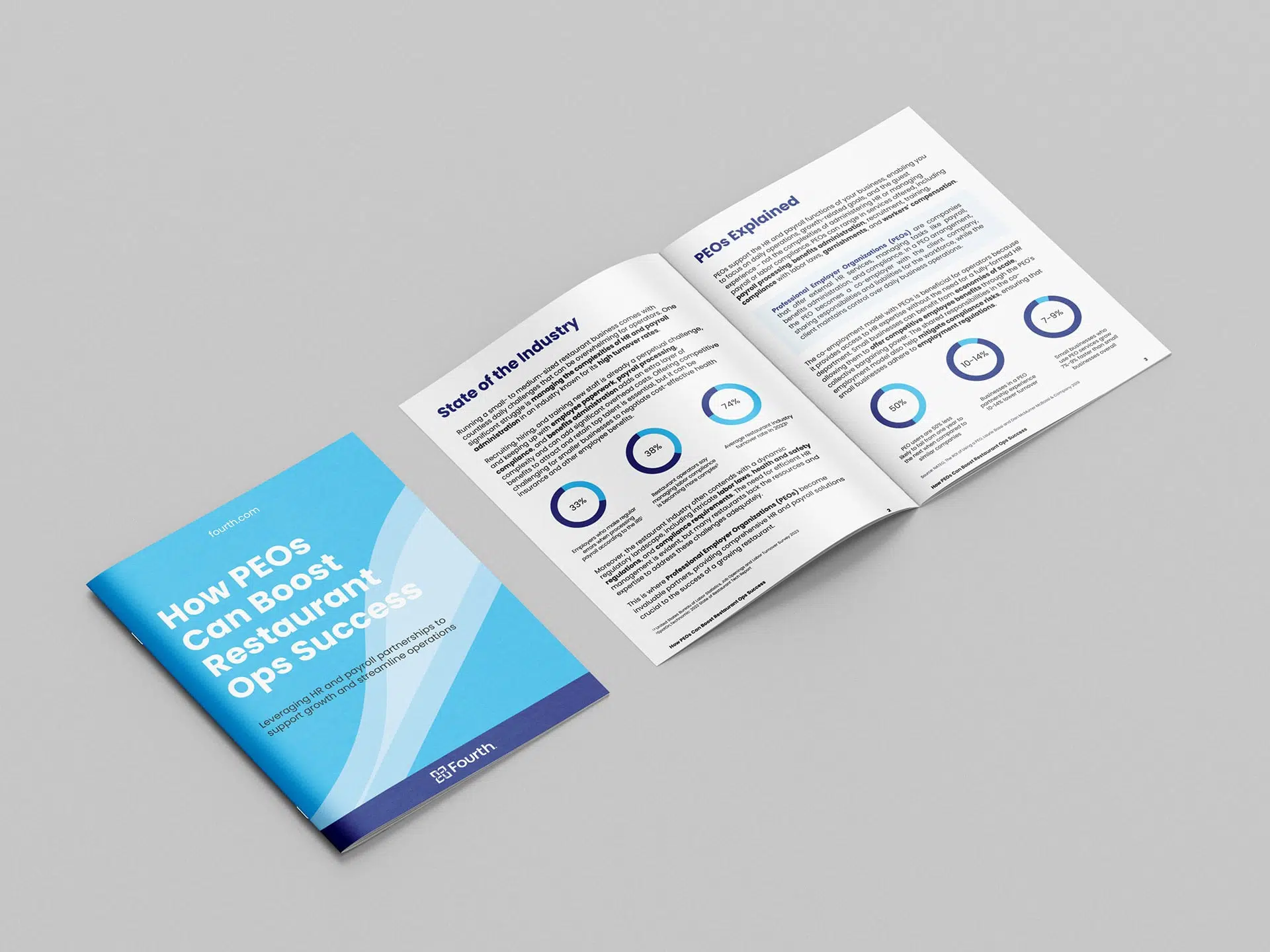
Restaurants that embrace PEOs experience 7-9% faster growth than the average small business, and an impressive 27.3% cost savings in ROI. Additionally, businesses that partner with a PEO have 10-14% lower employee turnover.
On top of improving profitability, PEOs greatly simplify restaurant compliance. The restaurant industry faces some of the most complex compliance issues of any industry, and there is a constant need to stay on top of regulatory changes.
PEOs play an integral role here. They simplify tasks such as verifying employment eligibility, navigating visa issues, managing local labor laws, and more. A PEO partner will ensure you’re not blindsided by non-compliance consequences, which are often costly, and sometimes catastrophic.
Simplify Your Restaurant’s Compliance Today
Simplify your operations, stay compliant, and focus on what you do best—delivering exceptional dining experiences. Discover how our PEO services, coupled with HotSchedules technology, can transform your restaurant’s HR management and scheduling compliance. Explore how you can avoid non-compliance fines and improve ROI with Fourth PEO.
Implementing Effective Compliance Strategies
As a restaurant owner or manager, you need reliable strategies to help you stay compliant. Let’s explore the steps you need to take.
Choosing the Right PEO Partner
Selecting the right PEO can be the difference between experiencing seamless compliance and finding yourself in an unwanted legal battle. But not all PEOs are equally prepared for the challenges that come with managing a restaurant.
When you choose a PEO, you want to ensure that they demonstrate expertise in labor laws, EEO laws, I-9 compliance, and predictive scheduling. Knowing that your PEO can help you adhere to OSHA regulations and health codes is crucial in your mission of maintaining a safe, healthy environment.
Ideally, you want a PEO that offers a wide range of services, integrates with the technology you already use, and that has a proven track record working with the restaurant industry. Restaurants face a unique collection of regulations and management concerns, so be sure your PEO is prepared with industry-specific expertise.
Leveraging Technology for Compliance
Technology can be a powerful tool for compliance, and the right PEO partner can guide you in using it to your benefit. From predictive scheduling software to advanced HR systems, technology can help you better manage labor laws, wage and hour laws, and health and food safety regulations.
If you’re managing scheduling with an intelligent tool like HotSchedules, be sure that your other important platforms are equipped to integrate with it. A PEO like Fourth makes this simple by partnering directly with top employee management tools.
Ensure Your Restaurant’s Compliance and Success
Take the first step towards a more compliant and successful restaurant today. Reach out to us for a free consultation and learn how our PEO services, combined with HotSchedules technology, can streamline your HR operations.