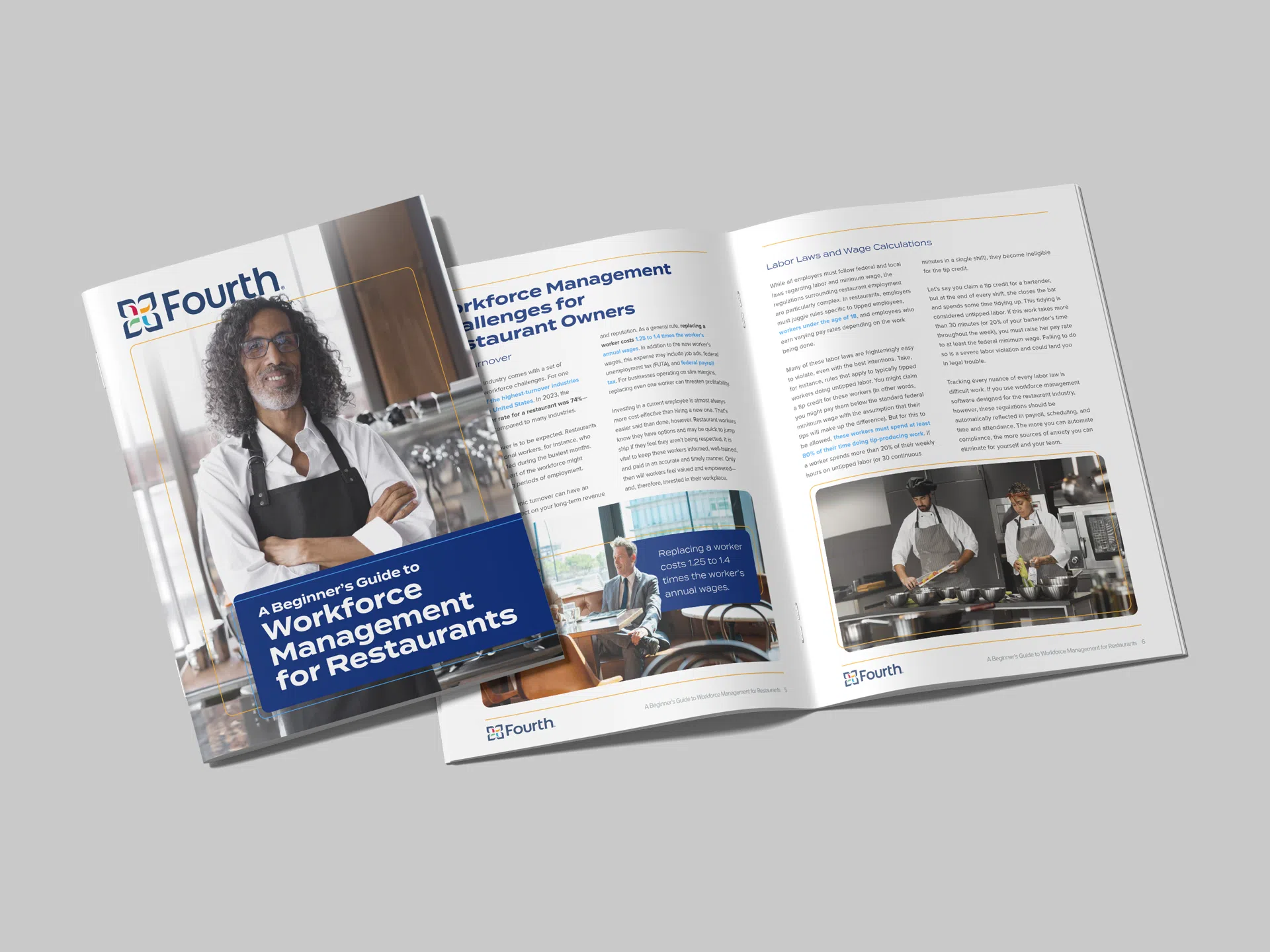
A Beginner’s Guide to Workforce Management for Restaurants
Facing unprecedented demand, restaurant managers need new strategies to support worker efficiency and satisfaction. Workforce management software can help.
Facing unprecedented demand, restaurant managers need new strategies to support worker efficiency and satisfaction. Workforce management software can help.
This year, for the first time in history, restaurant sales are projected to top $1 trillion. But 62% of restaurant operators don’t have enough employees to meet that demand—and 79% are having trouble filling vacancies.
In this period of unprecedented demand, maintaining an efficient, healthy workforce might seem like an impossible task. But workforce management software can change that. With the right tools, you can hire new workers easily, regain lost time, and improve employee satisfaction and retention. Take your business further without adding work to your plate.
Small restaurant operators across the United States face significant challenges in managing their workforces. Turnover is high, hiring is competitive, and restaurant HR presents a complex landscape of possible pitfalls and violations.
The restaurant industry is growing rapidly, with restaurants expected to add 200,000 new jobs by the end of 2024. While this growth signals opportunity, it also introduces new struggles for employers who must compete harder than ever to attract both customers and employees.
Building customer loyalty and sustainable profits starts with managing your team effectively. Even a single absence can shift a profitable shift into an unprofitable one, creating a cycle of stress, absenteeism, and employee turnover.
Workforce management provides the tools and strategies needed to protect employees while improving operational efficiency and profitability.
Despite temporary market dips, restaurant sales were projected to exceed $1 trillion in 2024. This growth has created an intensely competitive hiring environment.
Currently, 79% of restaurant operators report difficulty filling open positions, and 62% say they cannot meet customer demand with their current workforce.
Effective workforce management strategies help ensure restaurants are fully staffed and better able to control their existing labor pool, protecting both employees and margins.
Restaurants are among the highest-turnover industries in the United States. In 2023, the average restaurant turnover rate was 74%.
While some turnover is expected due to seasonal work and student employment, chronic turnover damages revenue and reputation. Replacing a worker typically costs 1.25 to 1.4 times their annual wages.
Retention depends on keeping employees informed, well-trained, and paid accurately and on time so they feel valued and invested in their workplace.
Restaurant labor laws are complex, particularly for tipped employees, minors, and workers earning variable pay rates.
Employers must closely track tipped versus untipped labor to ensure compliance with tip credit rules. Violations can result in severe legal and financial consequences.
Workforce management software designed for restaurants can automate compliance by reflecting regulations directly in scheduling, payroll, and time tracking.
Clear communication and training are essential in fast-paced restaurant environments. Onboarding should include accessible documentation and clear support channels.
Ongoing communication tools such as collaborative scheduling, time tracking, and payroll systems help reduce frustration and improve engagement.
Across industries, 49% of workers want to grow their careers but are unsure how to do so, making training and development critical to retention.
Hiring has become highly competitive, and lengthy application processes discourage candidates. Applicant Tracking Systems (ATS) centralize applications, communication, and candidate evaluation.
An ATS transforms hiring from guesswork into data-driven decision-making, streamlining job postings, interviews, and onboarding.
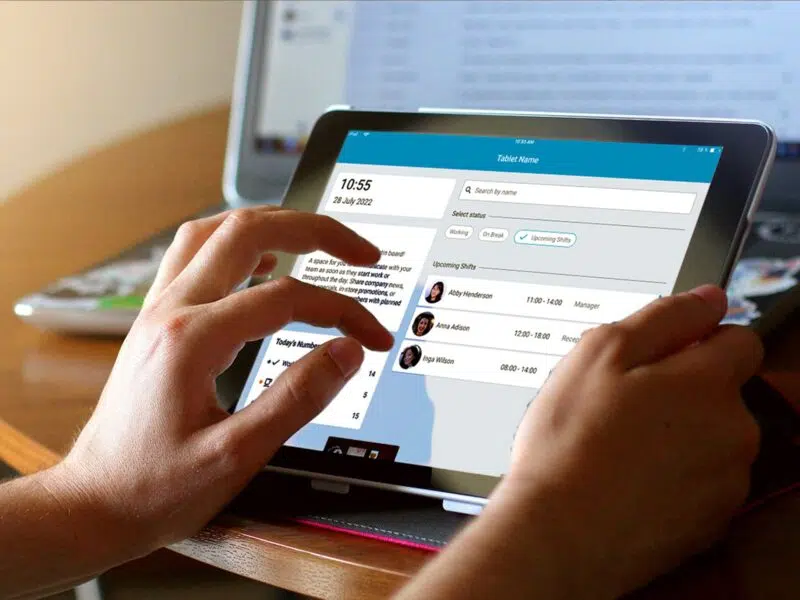
Manual scheduling quickly becomes inefficient as restaurants scale. Scheduling software remembers pay rates, preferences, and labor rules.
Tools like HotSchedules allow operators to create optimized schedules in 45 minutes or less, reducing administrative time by up to 75%.
Scheduling platforms also support shift swaps, availability requests, break enforcement, and overtime avoidance.
Poor payroll management can lead to delayed payments, employee frustration, and legal risk. The IRS estimates that 33% of employers make regular payroll errors.
Effective payroll software automates overtime calculations, tip credits, and integrations with time and attendance systems.
Outsourcing payroll and HR services allows restaurant owners to focus on operations while reducing costs and compliance risk.
An above-store console provides real-time visibility across one or multiple locations, enabling oversight of schedules, overtime, and labor performance.
Workforce management tools should support accurate time tracking and data uploads to handle exceptions such as power outages or irregular punches.
Digital logbooks help visualize productivity, assign tasks, track compliance, and identify opportunities for improvement across locations.
Integrated platforms eliminate duplicate data entry, reduce errors, and streamline payroll, scheduling, and compliance into a single system.
Workforce management tools must reflect labor laws and support onboarding, background checks, and regulatory requirements. Industry-specific software and expert support teams provide the strongest compliance protection.
Workforce management software saves time, reduces costs, and minimizes compliance risk, but platforms vary widely in capability.
Selecting a solution proven to work for restaurants of similar size and complexity is the best way to ensure long-term success.
With the right workforce management partner, operators can focus on delivering memorable dining experiences while maintaining a stable, engaged team.
Save time, reduce costs, and increase profitability with Fourth’s intelligent solutions.