Beginner’s Guide to Restaurant Operations Technology
68% of operators say tech and automation will be used to battle the labor shortage. When there’s too much to do in a day, the way forward is to streamline, automate, and off-load those tasks.
68% of operators say tech and automation will be used to battle the labor shortage. When there’s too much to do in a day, the way forward is to streamline, automate, and off-load those tasks.
Between hiring, training, scheduling, HR, compliance, and the day-to-day tasks of running a restaurant, restaurant operators are overstretched and overworked. This dynamic leads to higher turnover, lower profitability, and a worse experience for customers and staff alike.
Restaurant operators today are automating and offloading the tasks that used to consume their workday by leveraging technology solutions and strategic partnerships.
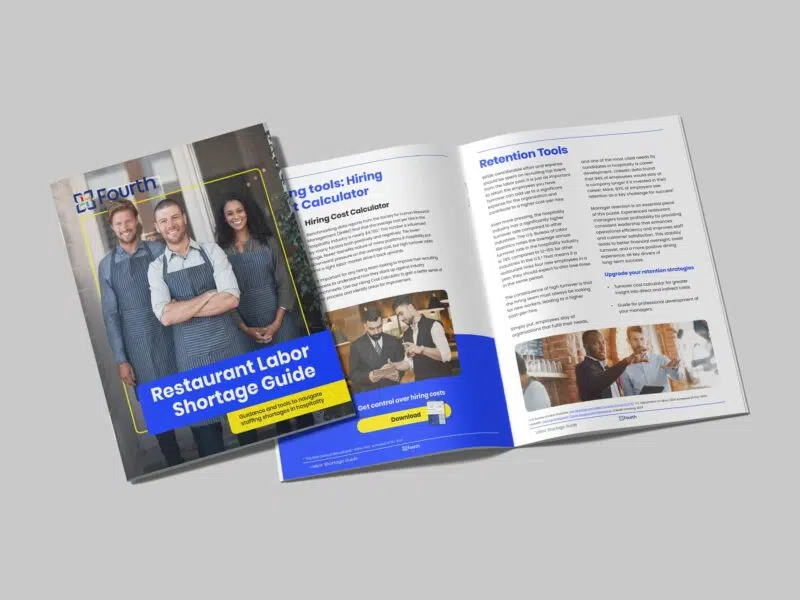
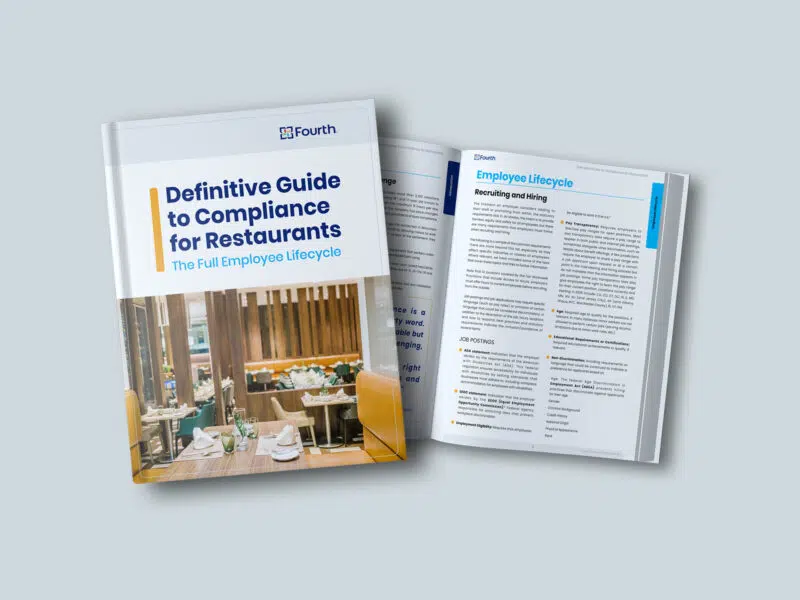
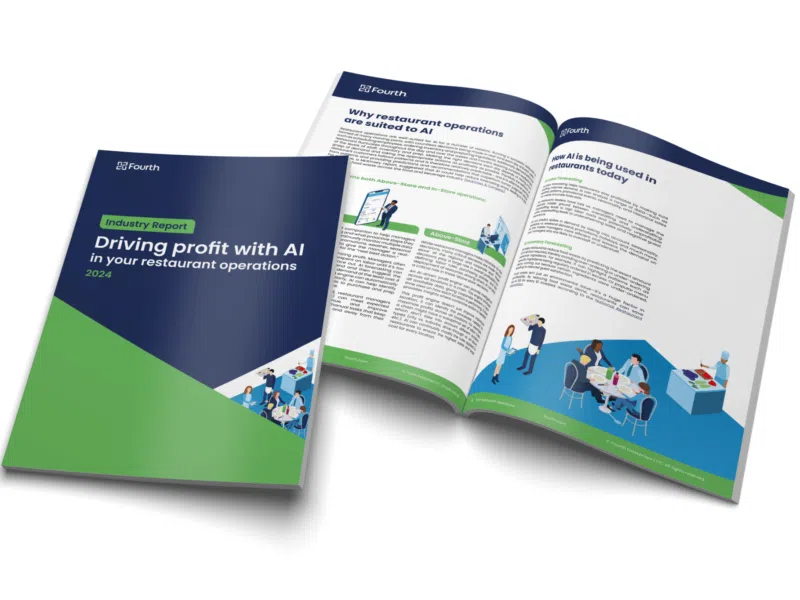
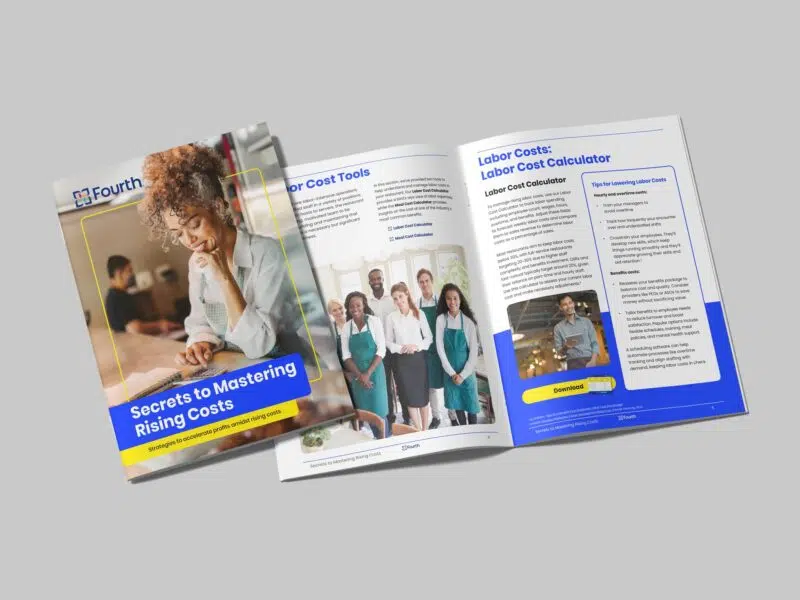
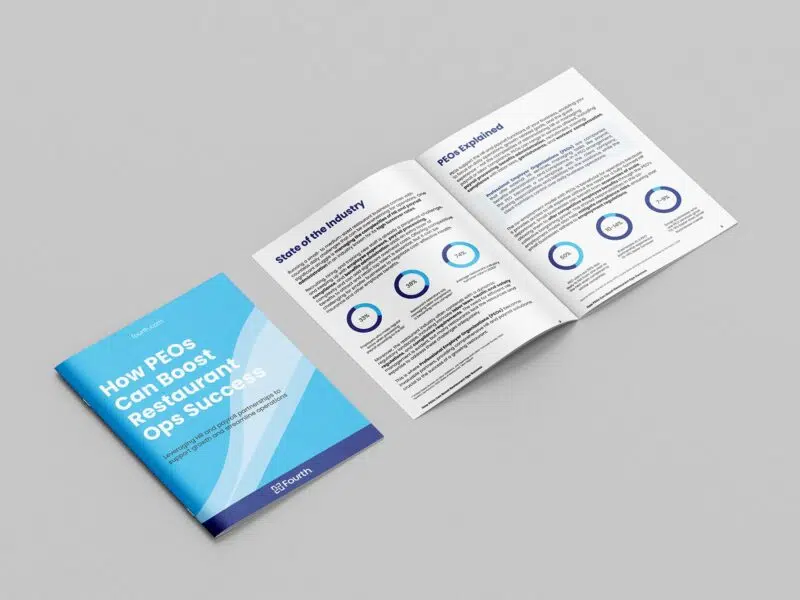
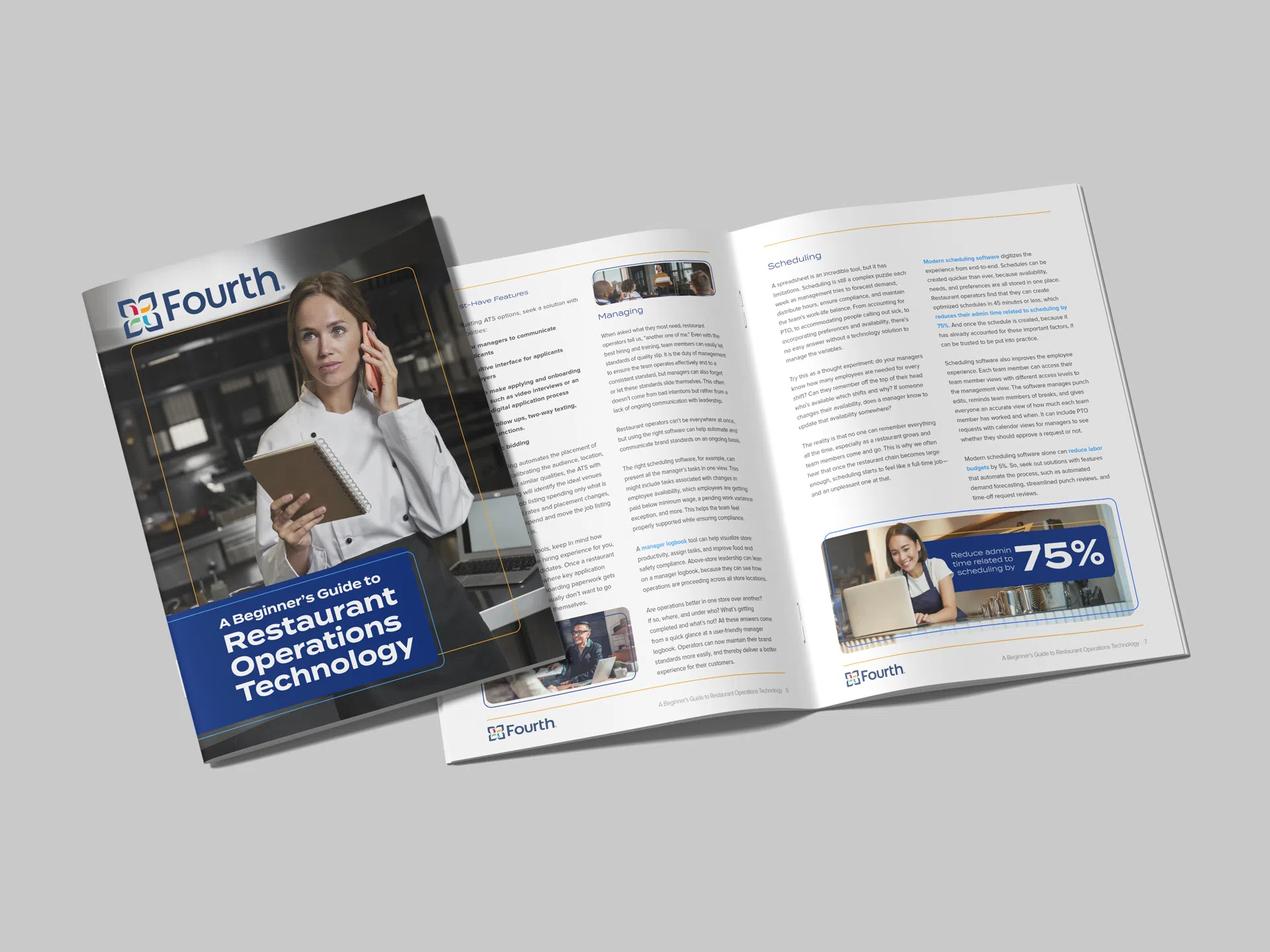
Download our Beginner’s Guide to Restaurant Operations Technology to learn how you can clear your plate and get back to your passion, your business, and your customers.
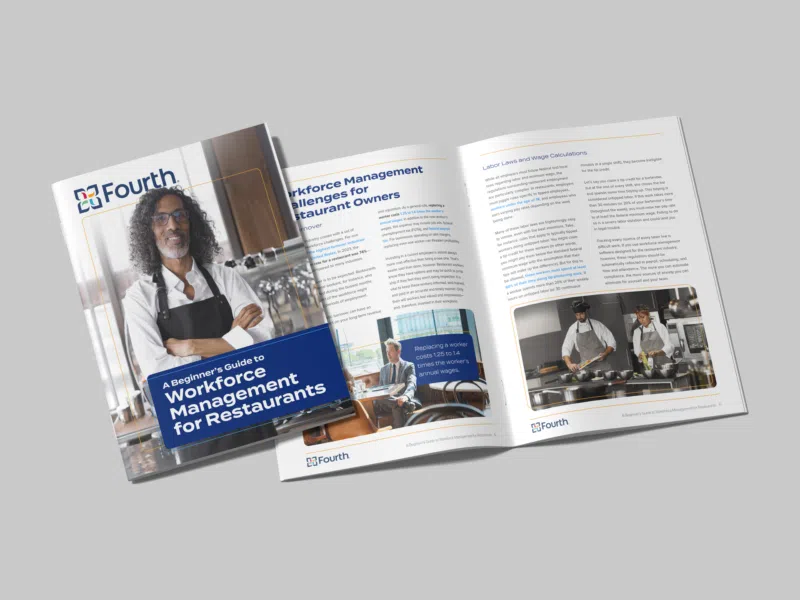
Workforce management is a struggle for small restaurant operators everywhere. Between hiring, training, scheduling, HR, and the day-to-day tasks of running a restaurant, there is simply too much to do and not enough time to do it all. Standards may slip or some of these tasks could fall by the wayside as a result. Ultimately, being this overstretched creates a dynamic of higher turnover, lower profitability, and a worse experience for customers and staff alike.
 Problems related to workforce management tend to domino to other areas of the business. Not having enough staffing leaves the team unable to adapt to change. One employee calling in sick can change a shift from profitable to unprofitable, which creates a more strained work environment. The lack of flexibility can push the team to seek employment at other restaurants. The increased turnover obliges management to spend more time training. Other tasks then become neglected and create further problems.
Plus, compliance is only becoming more complex as industry regulations continue to evolve. Small mistakes in scheduling, payroll processing, and tax deductions can lead to fees and fines for compliance violations or, in extreme cases, legal action. Few restaurant managers entered the industry, because they wanted to take on the role of HR manager. Lack of experience and lack of time for continuing education makes reliable HR support a continuing issue.
Somehow, amid these competing priorities and interconnected challenges, restaurant operators must also try to scale the business and open new locations. Growing means more hiring, more scheduling, and more workforce management in a tight labor market. Small restaurants traditionally struggle to offer more attractive benefits packages than their corporate competitors. Navigating the shifting business landscape to successfully grow requires a level of attention that is difficult to find in a busy workweek.
If you cannot grow your way out of a problem, if you cannot push through with grit, the way out is through efficiency. Technology solutions and strategic partnerships can empower restaurant managers to accomplish all of their responsibilities in less time and with a higher quality of work.
In this eBook, we’ll explore how restaurant operators today are automating, streamlining, and offloading the administrative tasks that formerly consumed their workday. With the right technology and partnerships, restaurant operators can get back to their passion, their business, and their customers.
Operators say they currently have openings that are tough to fill: 79%
Average loss gross revenue per store from improper staffing versus demand: 18%
Small restaurant chain operators see that technology can help manage, grow, and retain their workforces. 58% of operators say tech and automation will become more common in their segment. By using software specifically built for restaurants, operators can simplify their hiring processes, optimize scheduling, and automate payroll. From there, it’s just about selecting the right solution.
 Despite the opportunity, some operators of small restaurant chains are still reluctant to adopt technology solutions or to lean on service partners. Some may be intimidated at their ability to learn a new platform. Others worry about add-on costs. Where do you put the IT department in a café? Instead, they do what feels familiar: pen and paper or Excel.
But the driver of this rapid rise in technology adoption are the advances in cloud computing and software-as-a-service (SaaS) solutions. SaaS solutions can deliver specialized support, catering to the needs of small restaurants and chains without requiring the traditional technology infrastructure and personnel. Operators don’t need to hire the teams of analysts, IT technicians, and HR managers that the big chains do. By transitioning from manual tracking to software and finding external service providers, they can become more operationally efficient, reduce costs, and build their best-performing team.
Many restaurant operators also try to figure out HR for themselves in an effort to conserve funds. Combined with labor supply issues, this contributes to a high turnover rate in the industry—restaurants faced a 101% turnover rate in April 2024, according to the U.S. Bureau of Labor Statistics. The money saved in keeping HR in-house is being lost to training and hiring.
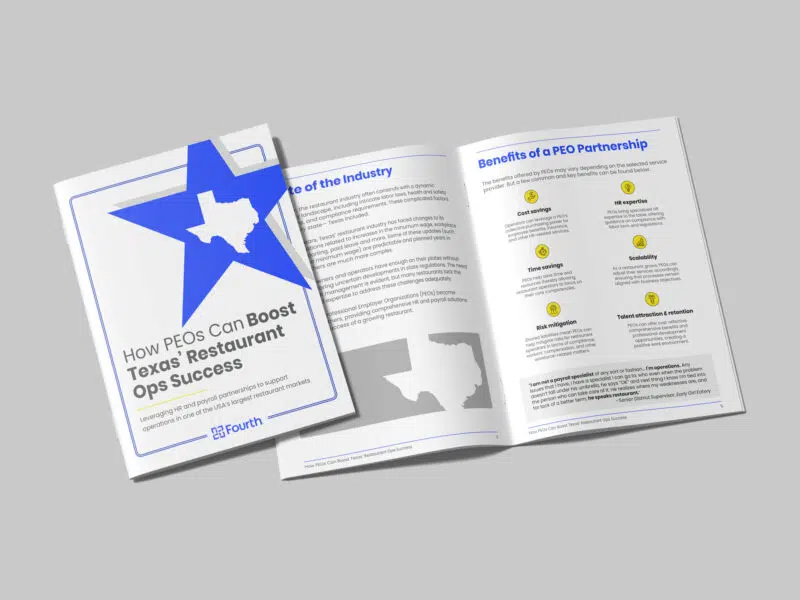
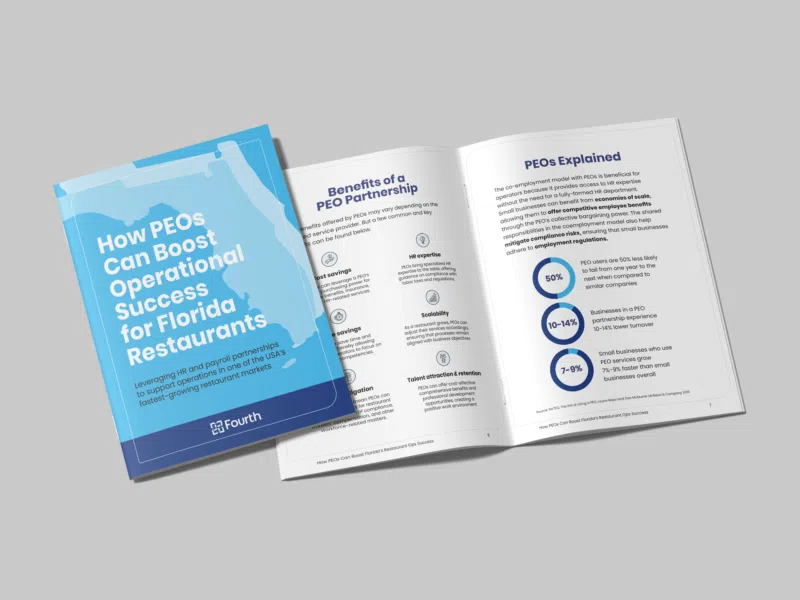
Forming partnerships with HR and workforce management experts can also take a huge compliance burden off operators. These partners provide new ideas, guidance on how to de-risk operations, and resources to help navigate all the complexities of HR that can keep restaurateurs awake at night. Businesses that work with HR & Payroll partners experience 10–19% lower turnover.
Operators say tech and automation will become more common in their segment: 58%
Lower turnover for businesses in an HR & Payroll partnership experience: 10–19%
Restaurant operators might realize they need technology and strong partners, but which ones? Small businesses can’t afford to go on shopping sprees, so careful evaluation is critical. Choose the tools and partners who can provide the biggest impact. Explore key considerations for your evaluation below.
 Even a few years ago, restaurants could evaluate a candidate based on whether they went the extra mile. Did they send a thank you email the same day? Did they make sure to follow some specific—maybe even purposely challenging—directions when applying? The best strategy for an in-person hiring process has always been to make a memorable, positive first impression.
The digital process has changed this dynamic for both the better and worse. Employers now have access to large distribution networks via social media to extend their brand and attract applicants. In turn, job seekers can apply for a position in minutes, selecting from dozens of restaurants all arranged in a row on the screen. It
becomes a numbers game for the candidate. When completing dozens of applications, friction in a clunky application process is more likely to cause abandonment. Candidates have so many options that they can just choose to work with whoever makes it easiest for them to get hired. To compete in this market, select the solution that optimizes the candidates’ experience in the application process.
The number one piece of software for making hiring easier is an Applicant Tracking System (ATS). A quality ATS delivers a one-stop shop for managing all hiring tasks. It is a centralized place where you can see how many people have applied, where each person is in the process, and coordinate the next step. Moving candidates promptly through interviews increases the likelihood of recruiting the best talent from the pool of applicants.
When they don’t have help, restaurant operators are guessing, trying to find the right job board, hoping someone finds it, getting the right forms to be filled out in the right order, processing everything, and doing their best to remember who to contact when. A great ATS changes hiring from a series of uncertain guesses to a set of confident choices.
When evaluating ATS options, seek a solution with these capabilities:
Programmatic bidding automates the placement of open positions. By calibrating the audience, location, experience level, and similar qualities, the ATS with programmatic bidding will identify the ideal venues and markets for the job listing spending only what is necessary. As optimal rates and placement changes, the ATS will adjust its spend and move the job listing to where the audience is.
When considering new tools, keep in mind how much easier it makes the hiring experience for you, your team, and your candidates. Once a restaurant operator lives in a world where key application questions or the right onboarding paperwork gets sent automatically, they usually don’t want to go back to keeping track of it themselves.
When asked what they most need, restaurant operators tell us, “another one of me.” Even with the best hiring and training, team members can easily let standards of quality slip. It is the duty of management to ensure the team operates effectively and to a consistent standard, but managers can also forget or let these standards slide themselves. This often doesn’t come from bad intentions but rather from a lack of ongoing communication with leadership.
Restaurant operators can’t be everywhere at once, but using the right software can help automate and communicate brand standards on an ongoing basis. The right scheduling software, for example, can present all the manager’s tasks in one view. This might include tasks associated with changes in employee availability, which employees are getting paid below minimum wage, a pending work variance exception, and more. This helps the team feel properly supported while ensuring compliance.
A manager logbook tool can help visualize store productivity, assign tasks, and improve food and safety compliance. Above-store leadership can lean on a manager logbook, because they can see how operations are proceeding across all store locations. Are operations better in one store over another? If so, where, and under who? What’s getting completed and what’s not? All these answers come from a quick glance at a user-friendly manager logbook. Operators can now maintain their brand standards more easily, and thereby deliver a better experience for their customers.
A spreadsheet is an incredible tool, but it has limitations. Scheduling is still a complex puzzle each week as management tries to forecast demand, distribute hours, ensure compliance, and maintain the team’s work-life balance. From accounting for PTO, to accommodating people calling out sick, to incorporating preferences and availability, there’s no easy answer without a technology solution to manage the variables.
 Try this as a thought experiment: do your managers know how many employees are needed for every shift? Can they remember off the top of their head who’s available which shifts and why? If someone changes their availability, does a manager know to update that availability somewhere?
The reality is that no one can remember everything all the time, especially as a restaurant grows and team members come and go. This is why we often hear that once the restaurant chain becomes large enough, scheduling starts to feel like a full-time job—and an unpleasant one at that.
Modern scheduling software digitizes the experience from end-to-end. Schedules can be created quicker than ever, because availability, needs, and preferences are all stored in one place. Restaurant operators find that they can create optimized schedules in 45 minutes or less, which reduces their admin time related to scheduling by 75%. And once the schedule is created, because it has already accounted for these important factors, it can be trusted to be put into practice.
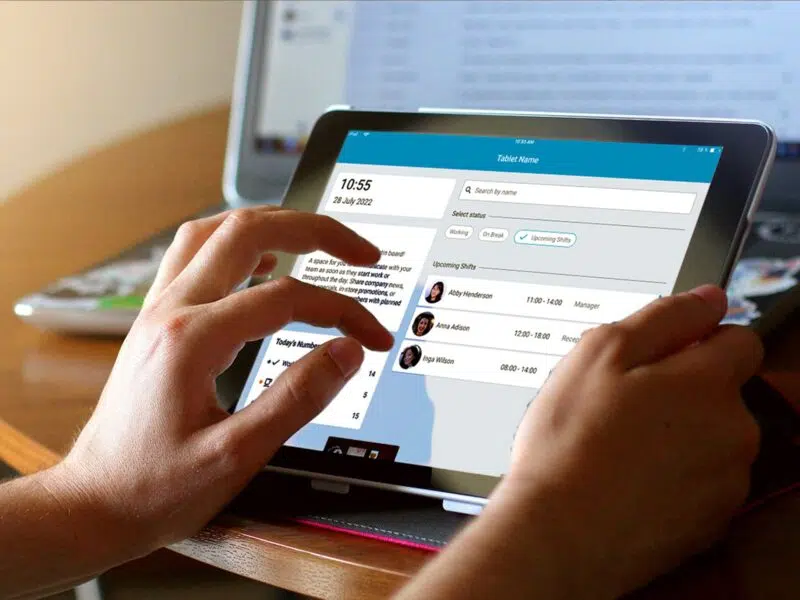
Scheduling software also improves the employee experience. Each team member can access their team member views with different access levels to the management view. The software manages punch edits, reminds team members of breaks, and gives everyone an accurate view of how much each team member has worked and when. It can include PTO requests with calendar views for managers to see whether they should approve a request or not.
Modern scheduling software alone can reduce labor budgets by 5%. So, seek out solutions with features that automate the process, such as automated demand forecasting, streamlined punch reviews, and time-off request reviews.
Reduce admin time related to scheduling by: 75%
Small businesses usually cannot afford the quality of benefits or expertise that larger corporations can. This might seem obvious, but it becomes a daunting challenge in the hiring process. If the small restaurant cannot deliver the same perks and benefits packages as its corporate competitors, it will struggle to find and retain talent. The corporations can afford to offer attractive packages while remaining profitable due to economies of scale. A corporation with 50,000 employees can pay much less per person for much better insurance than a restaurant with 30 employees.
That means many small restaurants can’t offer health benefits without eating away at profitability. Higher prices and extra fees to compensate can price the restaurant out of their market. But health insurance is becoming more and more expected, so what can restaurants do if they can’t pay to create their own health plans with an insurance provider?
 An HR partner can help secure a benefits package for the same costs as the big corporations by taking advantage of the same economies of scale. An HR partner who works with many small restaurants can pool all those employees together. Now they’re entering the market with a headcount comparable in size to a large corporation. All workers in this group can pay the same costs as if they worked at a big corporation. That partner can then pass on those cost savings to small restaurants, getting them big company benefits for small business costs.
Like benefits, small restaurants struggle to recruit HR support compared to corporations. A large corporation can afford to pay teams of experienced and highly trained HR professionals as full-time team members. Whereas small restaurants usually can’t afford even one full-time HR professional.
As a result, restaurant owners and managers often become part-time HR professionals themselves. Without experience and training, it is hard to expect excellence. The HR support in-house is usually just enough to get by.
The right HR & Payroll partner can alleviate this problem for a small restaurant. Similar to benefits, they can hire true HR experts and spread them across multiple small businesses. The reality is most small businesses don’t generate enough work to fill a full-time HR position anyway. What the restaurant needs more is access to expertise. They just need to be able to access an HR or payroll professional at the right time for the right task.
HR & Payroll experts have a wide set of functions and offers, so it’s important to find a partner focused on the services you need most. Some of the key services include payroll processing, benefits administration, recruitment, training, compliance with labor laws, garnishments, workers’ compensation, and more.
The cost to find, hire, and train any new team member is significant, but in a tight labor market, those costs climb even higher. Every lost team member directly impacts the bottom line. The time spent hiring and training to make up for lost team members is time operators aren’t delivering an exceptional experience—or making the kind of revenue they could be.
 Retention becomes even more important for the A-players. The best team members understand processes, improve morale, ease communication with everyone, and get the job done. Even losing one of these team members can disrupt functions in unexpected ways.
As a result, it’s critical to keep good employees productive, engaged, and happy, but the reality is that job hopping is more common than ever. And a difference in benefits is one of the key reasons why employees change jobs.
On-demand pay is one of those benefits that’s driving turnover at small restaurants. Employees are leaving their positions in favor of restaurants that offer this payment flexibility. It’s quickly becoming an industry standard. Why is this transformation happening seemingly overnight? Simple—workers and businesses love it.
Workers are choosing restaurants with on-demand pay, because it gives them access to the money they need for unexpected expenses ahead of traditional pay days. When workers have a Visa card with funds available immediately after a shift, for example, they instantly feel the impact of their hard work. That immediate gratification leads to increased satisfaction. In fact, 79% of workers say they would be willing to switch employers for on-demand pay.
Employers also love on demand pay. Small restaurant businesses are choosing it, because employees feel more motivated to pick up shifts when they can see an immediate pay day. It starts feeling like a game. One more shift leads to one more check they can immediately use, which incentivizes picking up another shift. With just a change in pay dynamics, on-demand pay alleviates retention and coverage issues. In fact, 74% of workers reported fewer unplanned absences, because of on-demand pay.
To better understand what workers are thinking, feeling, and needing, restaurant operators are frequently turning to employee satisfaction surveys. These surveys provide a sense of what’s working, what’s not, and why an individual might leave. Manual surveys can be time-consuming and fall to the bottom of a to-do list, so finding an automated employee survey solution could save time while providing needed insights.
When it comes to managing labor, it’s imperative that operators can answer key business-critical questions, including:
When faced with too many tasks and not enough time or experience to complete them all effectively, the way forward is technology and partnerships. Seek solutions and partners that address the biggest challenges and consider these final best practices for your evaluation:
Overall, restaurant operators engage with technology and strategic partnerships to save time, stay compliant, and keep their workforces engaged. Knowing that they’re hiring and retaining top talent, restaurant operators can spend their time doing what they do best: creating unique and delightful dining experiences for their guests.
Save time, reduce costs, and increase profitability with Fourth’s intelligent solutions.